
Getting Financing for an EV in Ontario: What Buyers Need to Know
Getting Financing for an EV in Ontario: What Buyers Need to Know
Posted on October 16, 2026
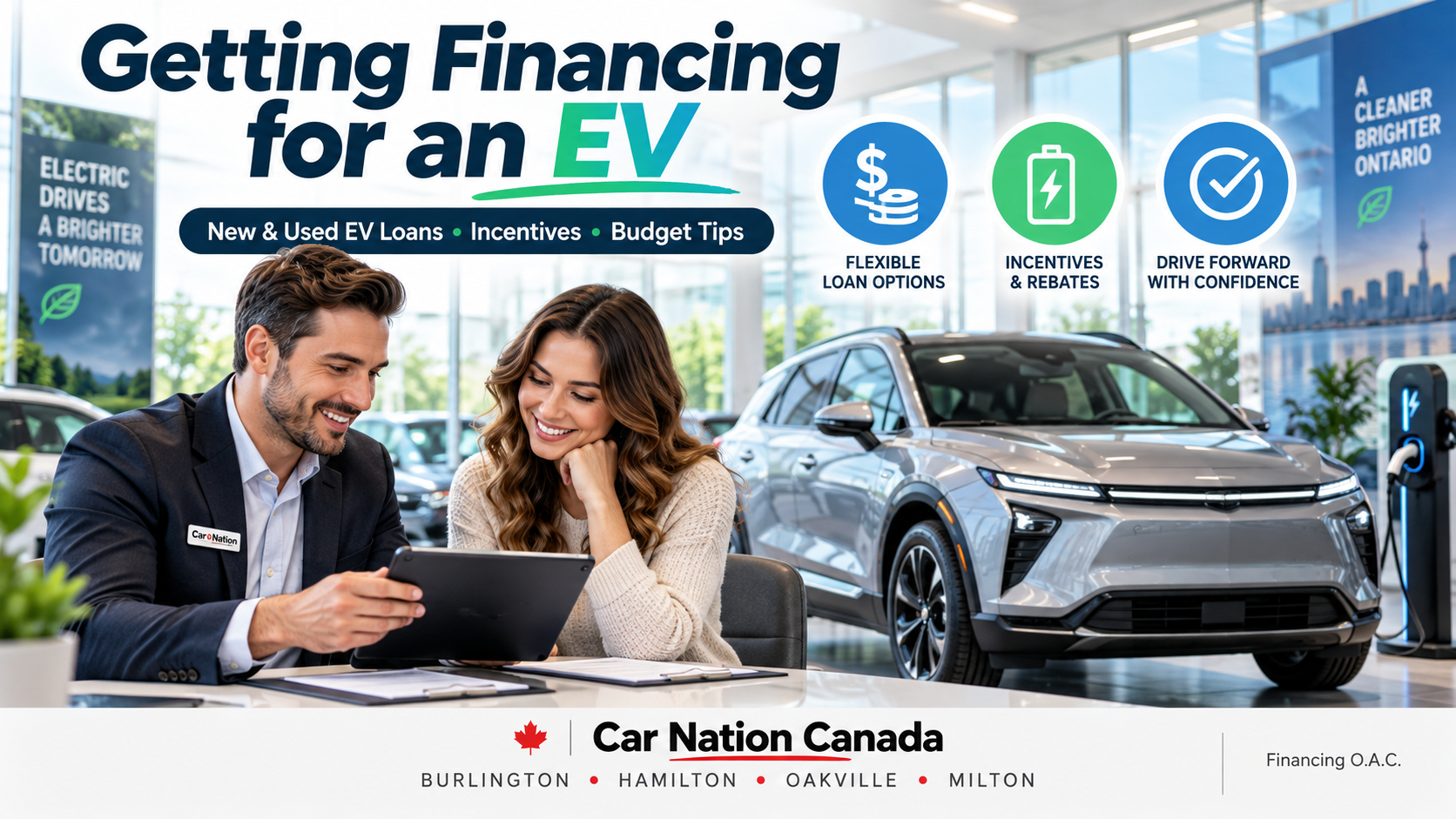
Getting Financing for an EV in Ontario: What Buyers Need to Know
Thinking about making the switch to an electric vehicle? Before you picture yourself passing the gas station, there is another important question: how will the financing fit your budget?
You can finance both new and used electric vehicles in Ontario. The process generally follows the same structure as a conventional auto loan: choose an eligible vehicle, apply for financing, and repay the amount borrowed under the lender’s agreed terms. Approval remains subject to the lender’s requirements. RBC Royal Bank
The smart move is to look beyond the advertised payment. Your loan, charging arrangements, insurance, and vehicle condition all belong in the same conversation.
How Does EV Financing Work?
An EV loan lets you spread the purchase cost over an agreed repayment period rather than paying everything upfront.
You can explore financing through a dealership or approach a bank or credit union directly. Dealerships may arrange loans through manufacturer financing divisions, financial institutions, or independent finance companies. Comparing options helps you understand what is available for your circumstances. Canada
The main numbers to review are the amount financed, annual percentage rate, payment frequency, loan term, financing fees, and total repayment amount.
A lower payment does not automatically mean a less expensive loan. The Financial Consumer Agency of Canada recommends comparing the full borrowing arrangement—not just the payment or interest rate. Canada
What Do Lenders Consider When You Apply?
Being interested in an EV is the starting point. Your financial circumstances help determine the financing options.
Lenders assess information such as your credit history, income, financial obligations, and the amount you need to borrow. The vehicle and the lender’s own policies can also influence the financing offered. A preliminary assessment or conditional approval should not be treated as a completed loan agreement. Car Nation Canada
To prepare, have the basic documents ready:
- Identification: Government-issued photo identification.
- Income evidence: Recent pay statements or other documentation requested by the lender.
- Payment information: A void cheque or pre-authorized payment form when required.
Those are common starting documents, not a guarantee that nothing else will be needed. TD’s published auto-financing checklist, for example, identifies these items as documents to bring to a participating dealership. TD Bank
Before completing an online application, read the credit-check consent and ask whether the result is an estimate, conditional approval, or final approval. RBC specifically distinguishes its affordability estimate from a formal lending approval. RBC Royal Bank
Should You Finance a New or Used EV?
The better choice is the one that works with your budget and driving needs—not simply the one with the newest model year.
For a new EV, compare the vehicle price and available financing together. Some lenders offer special financing arrangements on selected electric vehicles, but eligibility and terms vary. Do not assume every EV qualifies for the same program. RBC Royal Bank
For a used EV, compare the purchase savings against the financing cost and remaining warranty. A lower purchase price can reduce the amount you need to borrow, but the interest rate and loan length still matter. New and used vehicles should both be considered when finding a vehicle that fits your budget. Canada
Ask for available battery-health information and confirm the exact remaining battery coverage, including its time limit, kilometre limit, and conditions. Do not assume a used purchase starts a fresh manufacturer battery warranty. Tesla, for example, states that the balance of its original Battery and Drive Unit Limited Warranty continues to apply to pre-owned vehicles. Check the warranty documents for the specific vehicle you are considering. Tesla
Can an EV Incentive Reduce the Amount You Finance?
Potentially—but an incentive and a financing approval are separate matters.
As of October 16, 2026, Transport Canada’s Electric Vehicle Affordability Program provides incentives of up to $5,000 for eligible new battery-electric vehicles and up to $2,500 for eligible new plug-in hybrids. Ordinary pre-owned EV purchases are not eligible. Certain demonstrator vehicles can qualify under the program’s conditions. Transport Canada
Eligibility includes manufacturing-location requirements and, generally, a program-defined final transaction value of $50,000 or less. Canadian-made EVs are exempt from that price cap. Do not assume the advertised price alone establishes eligibility. Transport Canada
The dealership must validate eligibility, and an approved incentive is applied to the sale agreement after taxes and fees. Funding availability and program conditions apply. Review the official Transport Canada incentive guidance before including a rebate in your budget. Transport Canada
What Could an EV Loan Payment Look Like?
The following is a calculated illustration, not a current financing offer.
Assume the final amount borrowed is $30,000, at a fixed 8.00% APR, with no borrowing fees and regular monthly payments. Any financed taxes or purchase charges are already included in that $30,000.
Over 60 months: The payment would be approximately $608.29 per month, with total repayments of approximately $36,497.51, including $6,497.51 in interest.
Over 84 months: The payment would be approximately $467.59 per month, with total repayments of approximately $39,277.26, including $9,277.26 in interest.
Extending the example loan lowers the monthly payment by about $141, but adds approximately $2,780 in interest. Actual payment rounding and contract calculations may differ.
Longer financing can also increase the risk of negative equity, where you owe more than the vehicle is worth. That matters when selling, trading, or dealing with an insurance total loss. Choose a term you can comfortably afford while considering the total borrowing cost. Canada
Budget for Charging, Not Just the Car Payment
An EV budget should reflect where you will actually charge.
Home charging adds to your electricity bill. Public charging may involve energy-based, time-based, session, or subscription charges, depending on the operator. Use the prices at the chargers you expect to use rather than assuming every charging stop will cost the same. Natural Resources Canada provides guidance on EV charging costs. Natural Resources Canada
Before purchasing, confirm whether your existing charging arrangement will meet your needs. A standard outlet may be suitable for some driving patterns, while others may benefit from a Level 2 installation. Get an installation assessment and quote before treating home charging as a settled expense. Natural Resources Canada
Also get an insurance quote for the exact vehicle and leave room for maintenance, seasonal tires, parking, and unexpected expenses. These costs belong alongside the payment when deciding what is affordable. TD Bank
For a Burlington, Hamilton, Oakville, or Milton driver, a useful question is: does this EV work with my actual commute, parking situation, and monthly budget?
Can You Finance an EV With Less-Than-Perfect Credit?
It may be possible, but approval is not guaranteed. Some lenders provide financing options for borrowers who are re-establishing credit, subject to their criteria and conditions. TD Bank
Focus on a manageable purchase rather than the maximum amount you might qualify to borrow. A less expensive vehicle or a down payment can reduce the loan amount and help limit borrowing costs. Avoid stretching the term simply to make an otherwise unaffordable purchase appear manageable. Canada
Car Nation Canada’s financing application provides a starting point for having your circumstances reviewed. Financing availability, rates, down-payment requirements, and terms depend on the application and lender approval. Car Nation Canada
Frequently Asked Questions About EV Financing
Is financing an EV different from leasing one?
Yes. Financing is a route to purchasing the vehicle. Leasing generally involves paying to use it for a set period, with return conditions and potentially a purchase option at the end. Compare the full contract, including any kilometre limits, wear charges, and buyout amount—not just the payment. Canada
Can I use my current vehicle as a trade-in?
A trade-in can contribute toward your next purchase, but any outstanding loan must be accounted for. When your current loan balance exceeds the vehicle’s value, rolling the difference into another loan increases the amount you need to borrow. Canada
Do I need to finance an EV to receive the federal incentive?
No. Eligible cash purchases and financed purchases can qualify, as can qualifying leases. The vehicle and transaction must meet the program’s requirements. Transport Canada
Start With the Budget, Then Find the EV
Going electric should make sense on the road and on paper.
Start by reviewing the Car Nation Canada vehicle inventory and asking about currently available electric and plug-in hybrid options. Then explore financing with Car Nation Canada so you can compare the vehicle, payment, and ownership costs together. Car Nation Canada
The goal is not simply to get approved. It is to choose an EV you can comfortably afford to buy, charge, and keep.
Financing available on approved credit (O.A.C.). Conditions may apply. Vehicle availability, financing terms, and incentive eligibility must be confirmed before purchase. The payment example is for education only and is not an advertised offer.